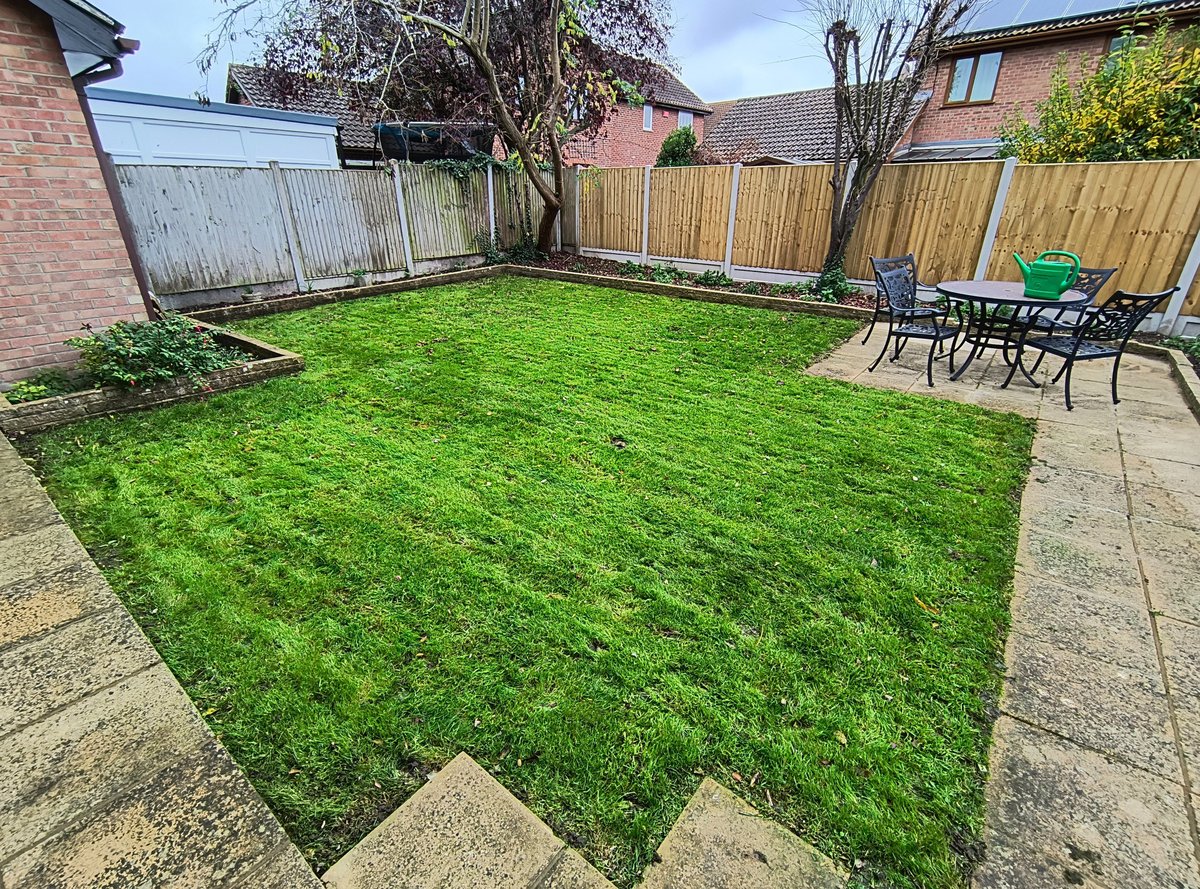
Why stripes happen
Stripes are an optical illusion. You’re not dyeing the grass, you’re bending it. Grass bent away from you catches the light and looks pale; grass bent towards you looks dark. That’s it. The roller on the back of the mower does the bending.
You’ll need
A rotary mower with a rear roller, or a roller attachment. A hover mower won’t stripe, it lifts the grass rather than bending it.
Step by step
- Mow the edges first. Do a lap of the perimeter so you have a clean border to turn in.
- Pick your reference line. A fence, wall or path edge, something straight to line your first stripe up against.
- Mow up. Keep your eye fixed on a point at the far end, not directly in front of the mower. It keeps the line straight.
- Turn and mow back. Come back in the opposite direction right next to your first pass.
- Overlap slightly. A couple of inches of overlap means no thin stripes of uncut grass between passes.
- Repeat to the other side. Each new pass goes in the opposite direction to the one before it.
- Final perimeter pass. Mow around the edge again at the end to hide the turning marks and frame the stripes neatly.
Pro tips
- Mow dry grass. Stripes show best on grass long enough to bend, around 3–5cm.
- Slow and steady. Rushing makes the mower wobble; wobbles show up as wavy stripes.
- Change direction next time. Next mow, stripe at 90° to this one to keep the grass healthy.
- No roller? You can drag a flat piece of timber over the lawn after mowing to get a similar effect, though a roller mower is much easier.
Want stripes without the effort?
Book us in and we’ll stripe your lawn for you. Most homes in Sandwich, Deal, Worth, Ash, Woodnesborough, Eastry and Sandwich Bay are just £20. Get in touch.