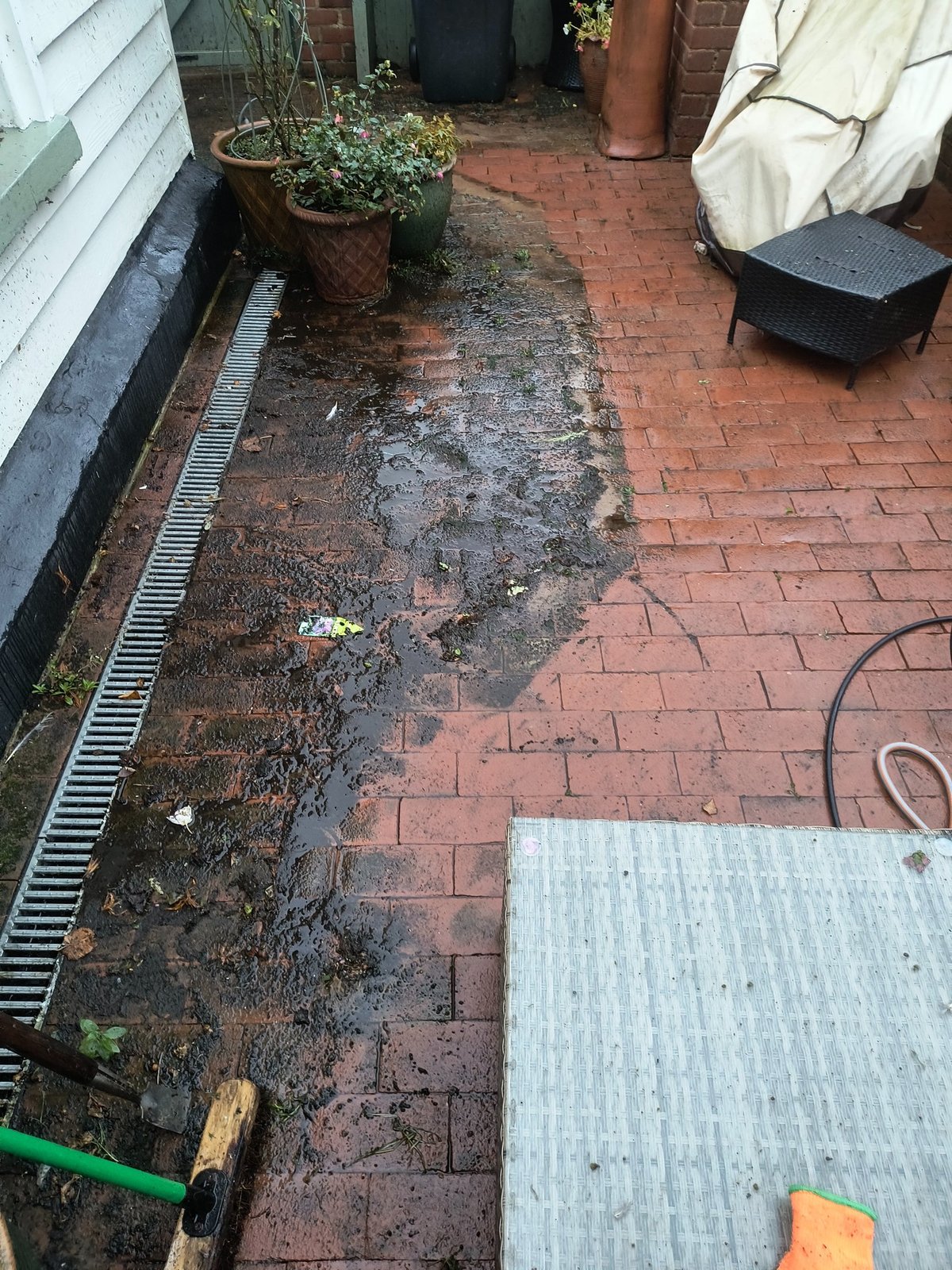
Before you start
- Sweep the area. Loose leaves and grit just fly everywhere when the water hits.
- Check the surface is suitable, concrete, block paving, natural stone, most paving slabs are fine. Wood and soft sandstone need a gentler touch.
- Cover delicate plants nearby with an old sheet.
- Wear closed-toe shoes, eye protection and old clothes. The spray kicks up surprisingly far.
The right nozzle
Most machines come with several. Use the wide fan (usually 25° or 40°) for paving, it spreads the force out. The pencil-thin jet is for stubborn spots only, and only for a second at a time; it can carve grooves into the paving.
Distance and angle
- Keep the nozzle around 30cm (a foot) from the surface.
- Hold the wand at a shallow angle, 30–45°, not straight down.
- Sweep slowly and evenly, overlapping each pass by a few centimetres.
Do a test patch first
Pick a hidden corner and run the washer for 10 seconds. If the surface looks fine, carry on. If grout is flying out or the stone is marking, stop and adjust.
Cleaning technique
- Pre-soak heavily stained areas with a patio cleaner for the recommended time.
- Start at the high end of the patio and work downhill so dirty water flows away from the clean area.
- Work in rows, keeping the nozzle moving at all times. Stopping creates light patches where the surface etches differently.
- Rinse the whole area at the end to sweep away any pooled dirt.
Re-sanding the joints
If your paving has sanded joints (rather than mortar), topping up with kiln-dried sand after washing keeps weeds out and stops the paving wobbling. Brush it in, let it settle, and give the patio 24 hours to dry before walking on it.
Prefer we do it?
We pressure wash paths, patios and driveways across East Kent. Just £35 an hour, and we take care of all the clean-up. See our pressure washing service or get a quote.