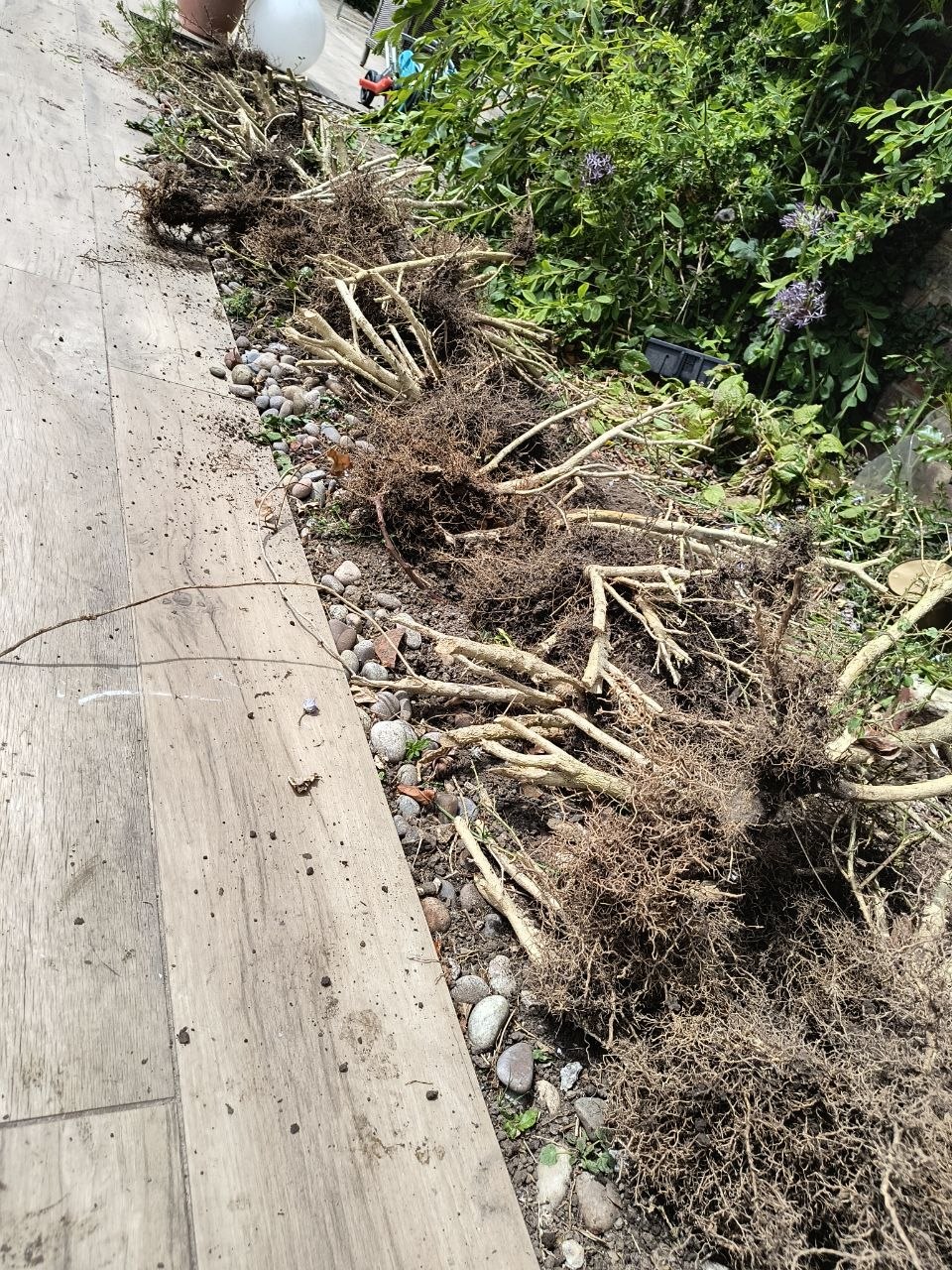
What the damage looks like
The caterpillars do the work. They feed from inside the hedge outward, spinning dense white webbing as they go. By the time the outside looks brown, the inside is often already bare stems and exposed roots.
Signs to look for:
- Brown or yellowing patches appearing suddenly, especially after warm weather
- White webbing inside the hedge — look into the centre, not just at the surface
- Small green-and-white caterpillars (up to 4cm) with a yellow-green stripe
- Tiny white moths with brown-edged wings flying near box in summer
The photo above shows what a badly affected hedge looks like once cleared — pale woody stems with no foliage, root systems exposed. At this stage the plant is unlikely to recover without replanting.
What actually works
Catch it early. The earlier you spot the webbing and caterpillars, the more options you have.
- Manual removal — for light infestations, physically removing caterpillars and webbing and destroying them can be enough.
- Biological treatment (Bt spray) — Bacillus thuringiensis var. kurstaki is a naturally occurring bacterium that kills box tree moth caterpillars without harming other insects. It needs to be sprayed inside the hedge (not just the outer surface) and repeated every 2–3 weeks during the season. This is our preferred approach for early-to-mid infestations.
- Pheromone traps — these catch adult male moths and help you monitor pressure. They won't stop an infestation alone but are useful as an early warning.
- Replanting — for hedges that have been stripped to bare stems, recovery is rare. Box (Buxus sempervirens) can sometimes be coaxed back from very hard pruning, but if the stems are dead and the roots exposed, replanting with a resistant alternative (yew, holly, or pittosporum) is often the better call.
What we can do
We can assess the extent of the infestation, clear affected material, apply Bt treatment, and advise on whether the existing plants are worth saving or whether replanting makes more sense.
If you've spotted any of the signs above — brown patches, webbing, sudden dieback — get in touch before it spreads further. We cover Sandwich, Deal, Eastry, Worth, Ash, and the villages around.
Sandwich Lawnmowing — covering East Kent, Sandwich, Deal, and the surrounding villages.
Worried about your box hedge?
Use the contact page or call Richard direct on 07449 303889. We'll take a look and tell you straight.